Contents
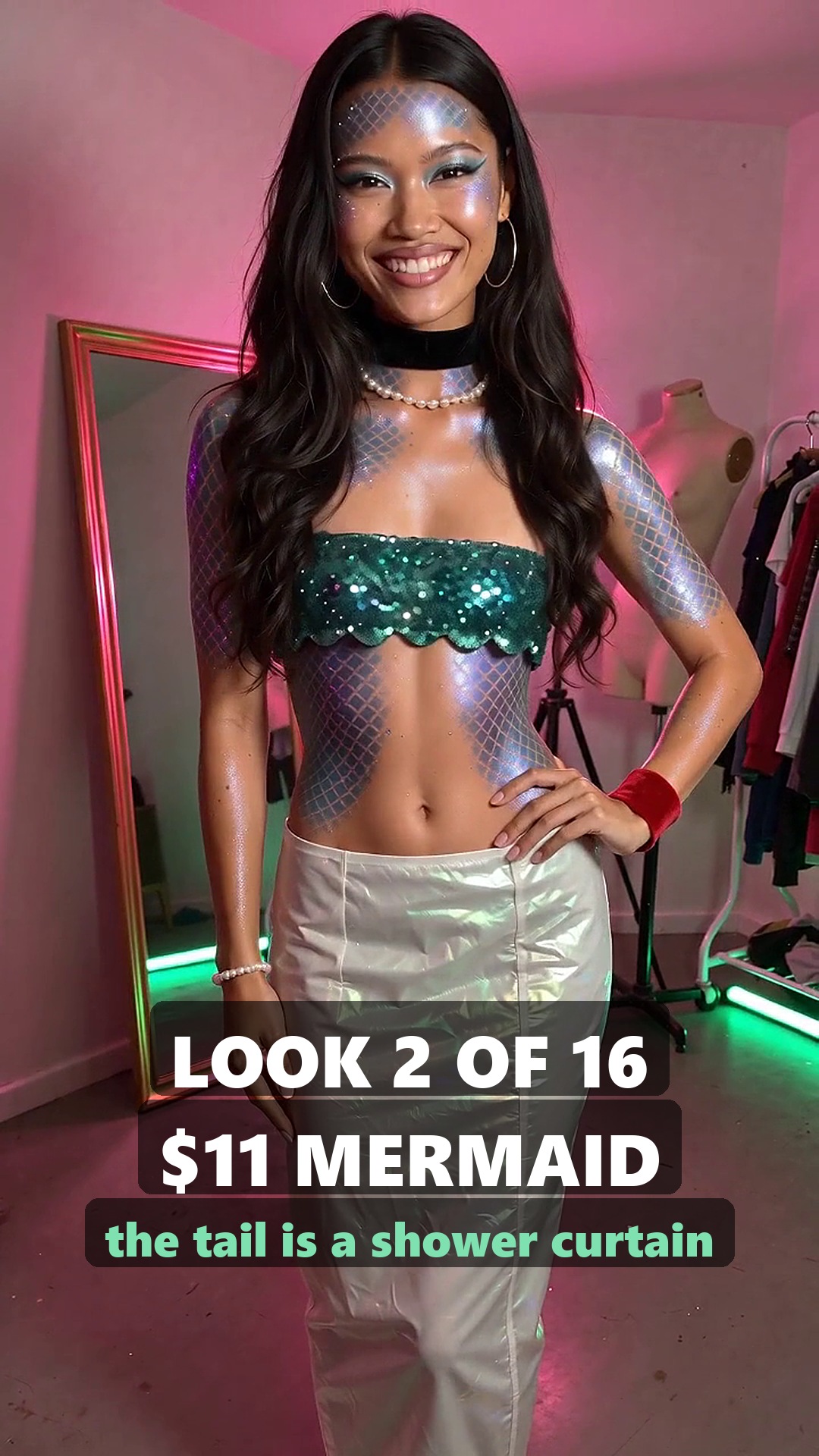
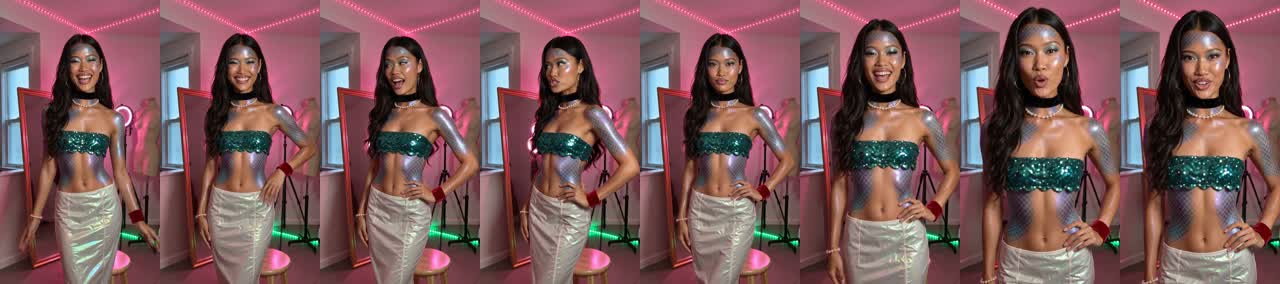
In the first post about Marguerite and the mermaid teaser post-mortem I said I’d publish the real cost and the real mess alongside the wins. This is look two’s reveal: Marguerite finishes the eleven-dollar mermaid costume from the thrift-store teaser and shows it off on camera. The storyboard-first process we adopted after the mermaid teaser’s seven wasted full-price takes worked. It caught a real mistake before we spent a single video credit. It did not catch everything.
The reveal
Follow along on Instagram, Facebook, or Pinterest to catch look three before it posts.
What the storyboard gate caught for free
Before any clip rendered, the approved after-reveal still showed Marguerite in a costume that was never part of the thrift-store haul from the teaser. A continuity break like that is expensive to notice once you’re chasing the wrong shot on a paid render. Catching it at the storyboard stage cost nothing but a second look at the comparison sheet.
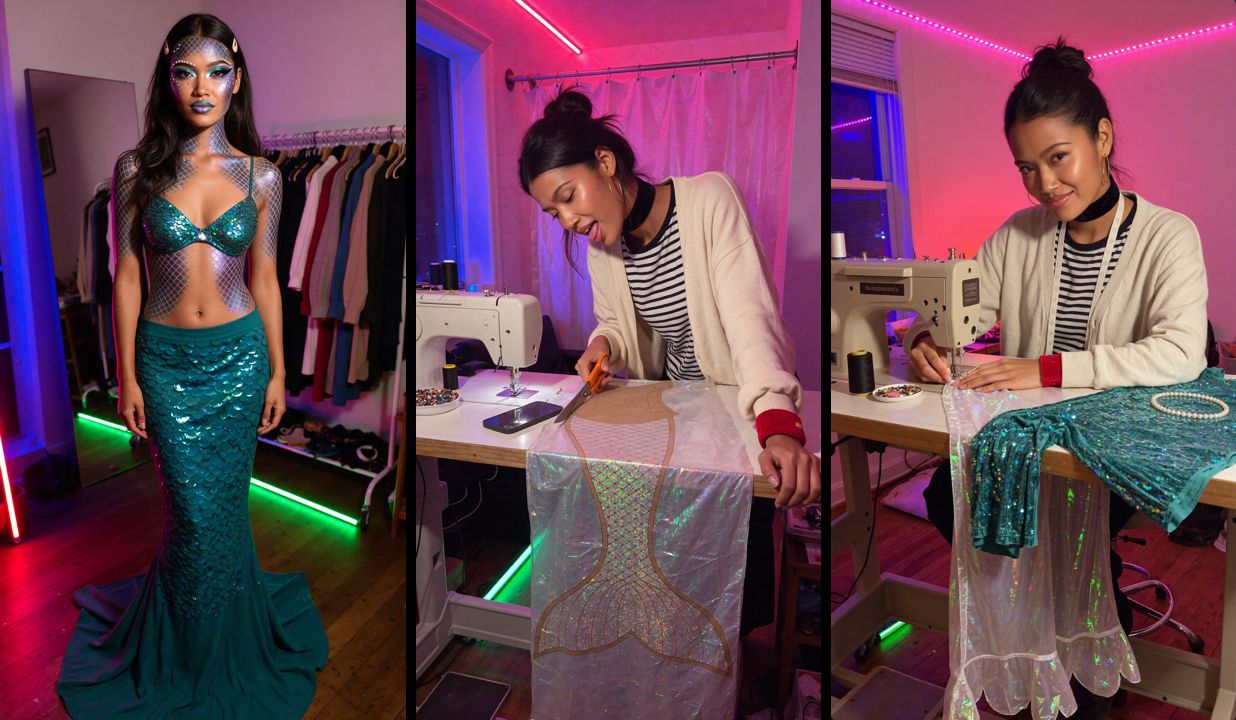
The scale makeup had a smaller version of the same lesson. The first render put the mermaid scale pattern on as a fishnet-style overlay, like she was wearing a net, instead of pigment painted on skin. Three image-only iterations and one Seedream edit fixed it, for something like a credit total, instead of finding the same problem inside a paid video take.
The numbers
The account’s Higgsfield balance opened the day at 3,000 credits, the monthly grant, and was down to 19 by the time this video’s production actually started. The mermaid teaser and the rest of that day’s work had used the rest. A 100-credit pack, $6.25, got bought mid-session to keep going. This video’s own production ran the balance from 110.15 down to 2.65.
| Video credits, this production | ~107.5 |
| Approx. real cost, at the pack rate that funded it | ~$6.72 USD / ~$9.50 CAD |
| For comparison, the mermaid teaser’s one 18-second clip on Seedance 2.5 | 448 credits / ~$19.63 USD |
| What the 107.5 credits bought | 5 Seedance Mini first takes, clip one’s 2 extra takes (kept / dropped), clip five’s 2 extra takes (take two / take three), a discarded Wan 2.7 attempt (watch it), a rejected Kling Lipsync pass (no footage saved — it never left the browser), roughly 15 image-only edits |
The mini pivot from the mermaid teaser post-mortem paid off. What it doesn’t fix is knowing whether a cheap take is actually correct.
What still went wrong
The cutting-pattern panel was too small and read as the wrong material. Two re-renders to get the fabric and the scale legible before it went into the sequence.
Clip one’s audio: Seedance Mini rewrote the spoken line. The script said “eleven dollars.” The model’s own audio generation said “11… hold on.” We tried muxing the real voiceover over a silent take and the lips didn’t match. We tried Kling Lipsync, a rival video model’s browser-based lip-sync tool, in its web Lipsync Studio, and I called it terrible — nothing saved from that pass, it never left the browser. We tried Wan 2.7, another video model, with the voice as an audio reference, which actually worked, and then dropped it once Mini produced a clean take on its own. What fixed it: render Mini twice more and pick whichever take’s own transcript matched the script — the one we kept against the one we didn’t. Four takes spent on one eight-second clip before it was right.
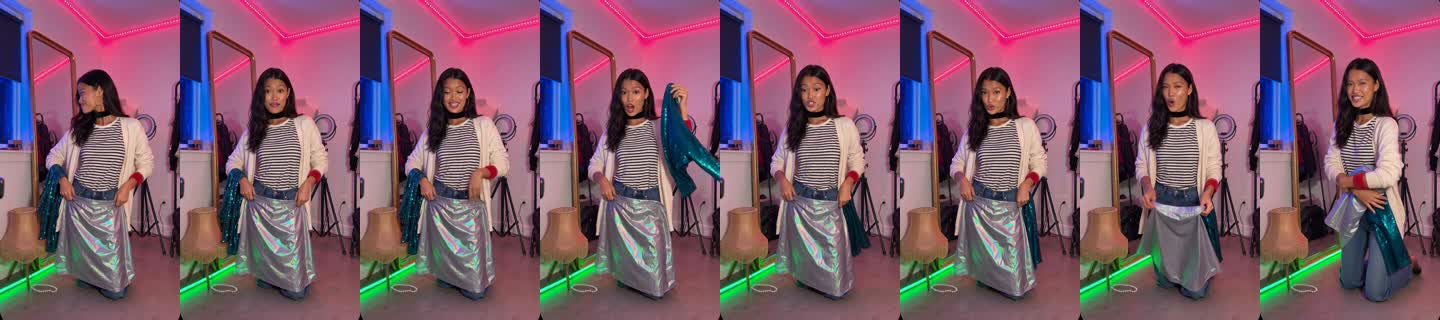
Clip five dropped a word, and Whisper missed it entirely. Whisper is OpenAI’s speech-to-text model — the automated tool we run against every take’s audio to catch obvious script mismatches before we watch it ourselves. “The one they remember” came out as “the one name they remember” on the first take. The transcript said nothing was wrong. It was only caught because I listened to the take myself, across two more re-takes (the second one here) before the line was clean.
The end card text ran off both edges of the frame. Font size 54 looked fine in the editor and clipped at the actual 720-pixel export width. A one-line fix, and a reminder to preview text overlays at the real export resolution before calling a cut final.
What changes next
The mini pivot is confirmed: a wrong guess now costs about what an image costs, not what a full render costs, and the storyboard-first gate is still catching real mistakes before they cost anything. The rule this video adds is narrower and, honestly, more annoying: a transcript is not a review. Whisper missed the exact word that mattered, twice, across the same production. Automated transcription catches most audio bugs. The last mile, one dropped or substituted word, especially a short one, still needs a human ear on every take before it gets called final.
This is the part of AI Secret Sauce nobody demos
Anyone can show you a good render. Weeks two and three of the AI Secret Sauce class at Cowork Chilliwack show what happens between the renders: catching a continuity break for free, and knowing when to stop trusting the transcript and just listen. Marguerite's outtakes are course material now.
See the course →Keep reading
- Meet Marguerite: We Built an AI Influencer to See If She Can Hit 21,000 Followers by Halloween: the first post, the target, and how she is built
- Five Takes for Eight Seconds: What Directing an AI Actor Actually Costs: the post-mortem that led to the Seedance Mini pivot this video paid off
- Meet Rae: The AI Strategist Who Rewrites Every Script Before It’s Shot: the persona who reviews every script before a credit gets spent
- We Tried Building an AI Team on Grok. Here’s Why We Moved to Self-Hosted Rakazo Instead: the bot platform that posts for her
Comments
Loading comments…
Leave a comment